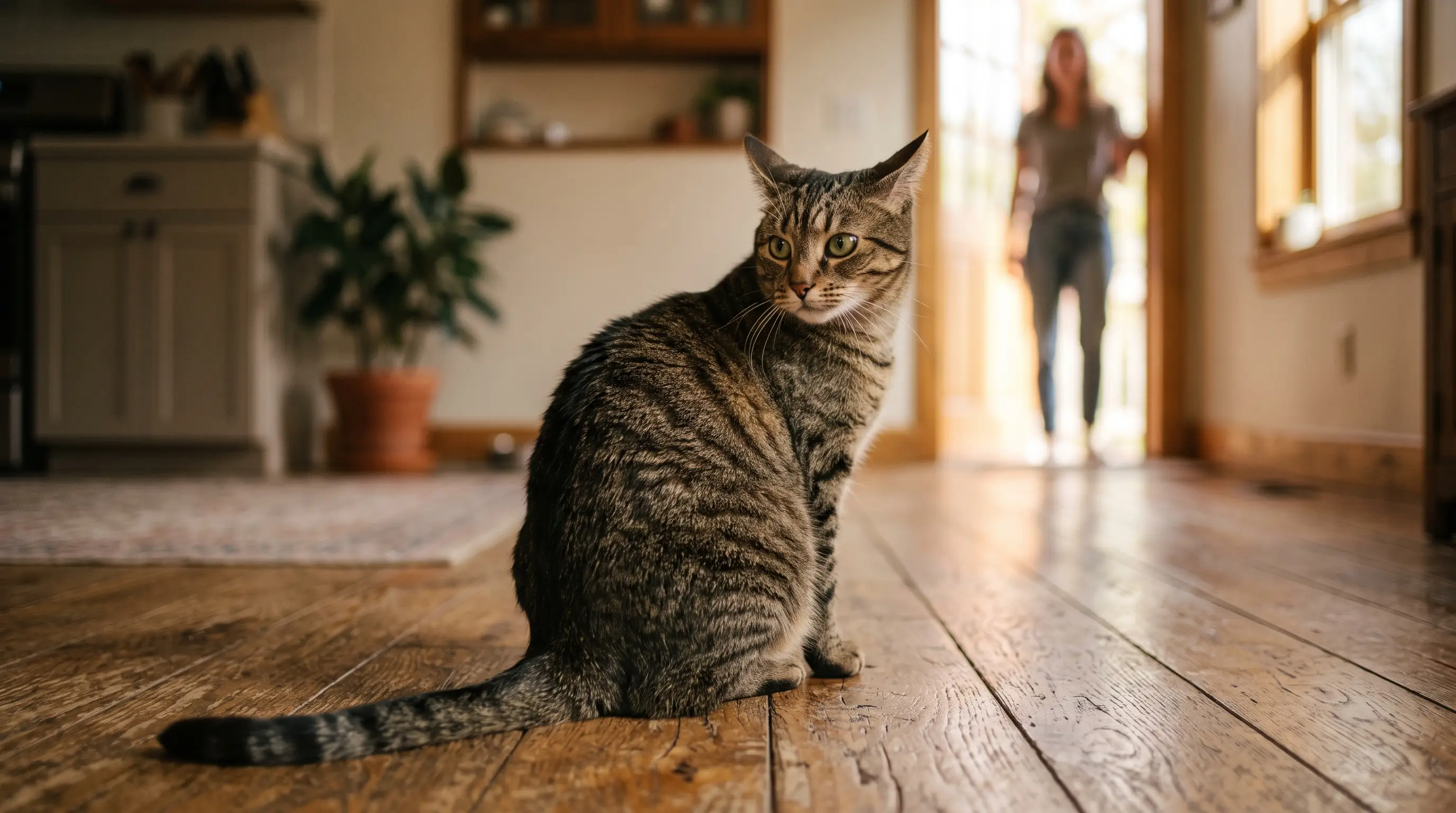
Cats know their names. They've decided not to answer
Your cat knows its name. That's not sentiment — it's a measured result from a Tokyo laboratory, where cats reliably picked their own name out of a list of soundalike words, even when a stranger did the reading. What the same research also shows is why you'd never guess it from the sofa: knowing the name and answering to it are, for a cat, two entirely separate decisions. Here is what actually registers when you talk to your cat, and how to make the name mean something worth responding to.
The name test
The clean evidence arrived in 2019, from Atsuko Saito's group in Tokyo. The method was elegantly sneaky: play a cat a string of recorded words with the same length and rhythm as its name, let it get bored of them, then slip the actual name in and watch. Bored cats ignore yet another word; cats that recognise their name betray it — an ear swivels, the head turns, the tail gives one flick. Across 78 house cats, that's exactly what happened: the name punched through the boredom where the soundalikes didn't, and it still worked when the voice was a stranger's rather than the owner's.
Two details are worth keeping. Cats living in multi-cat homes also reacted to their housemates' names, which means they're tracking more of the household's vocabulary than they let on. And cats living in Japan's cat cafés — surrounded by many people using many names — were noticeably worse at picking out their own, which points at how the learning happens: a name works when one word predicts that something is about to happen to you.
Hearing you, mapping you
The name study sits on older ground. Back in 2013 the same lab showed cats distinguish their own person's voice from strangers saying the same words — the responses were subtle orientation, ears and head rather than a dash to the door, but they were unmistakable to the coders scoring the videos. Cats hear exactly who is speaking; the full story of what that means for your relationship is in how cats choose their favourite person.
Stranger still is what cats do with a voice. In 2021, Saho Takagi's team played owners' voices through speakers at opposite ends of a room, so the owner seemed to teleport. The cats reacted with visible surprise — measurable startle at a physically impossible voice-jump — which means a cat hearing you isn't just registering sound. It's holding a map of where you are in the house and updating it by ear. The animal ignoring you from the windowsill knows precisely where you are, in a way it can pass a physics test on.
So do cats understand words?
Understand is doing heavy lifting there. No cat parses grammar. What cats demonstrably do is form fast, durable associations between specific sounds and specific outcomes — and recent work suggests startlingly fast. In a 2024 Japanese experiment, cats watching a screen learned which made-up word went with which cartoon image quickly enough to notice when the pairings were swapped, from a handful of exposures. A cat's working vocabulary is small and ruthlessly practical: its name, other pets' names, the words that precede food, the drawer that means the claw clippers.
Tone carries the rest. As with the voice studies, cats respond most to the high, sing-song register people use with animals, and the melody of a phrase often does more work than the words in it. Your cat may not know what "dinner" means as a noun — it knows exactly what your dinner-voice means as an event. Where the meow fits into this two-way vocabulary — a language cats mostly invented for us — is covered in what your cat's meow means.
So why don't they come when called?
Because nothing in a cat's history made answering mandatory. Dogs were selected for thousands of years on precisely this: attend to the human, respond to the call, cooperate on the job. Cats were never bred for obedience — they moved in, killed rodents, and largely domesticated themselves on their own terms. A dog that hears its name has an ancient contract to honour. A cat that hears its name has information, and information is merely one input into a decision it makes fresh every time.
So the ignoring is real, and it is literal: the Tokyo cats demonstrably heard and recognised their names while declining to get up. Whether your cat answers depends on the ledger it keeps — what following the name has led to before. Which is also the entire trick to changing it.
Making the name worth answering
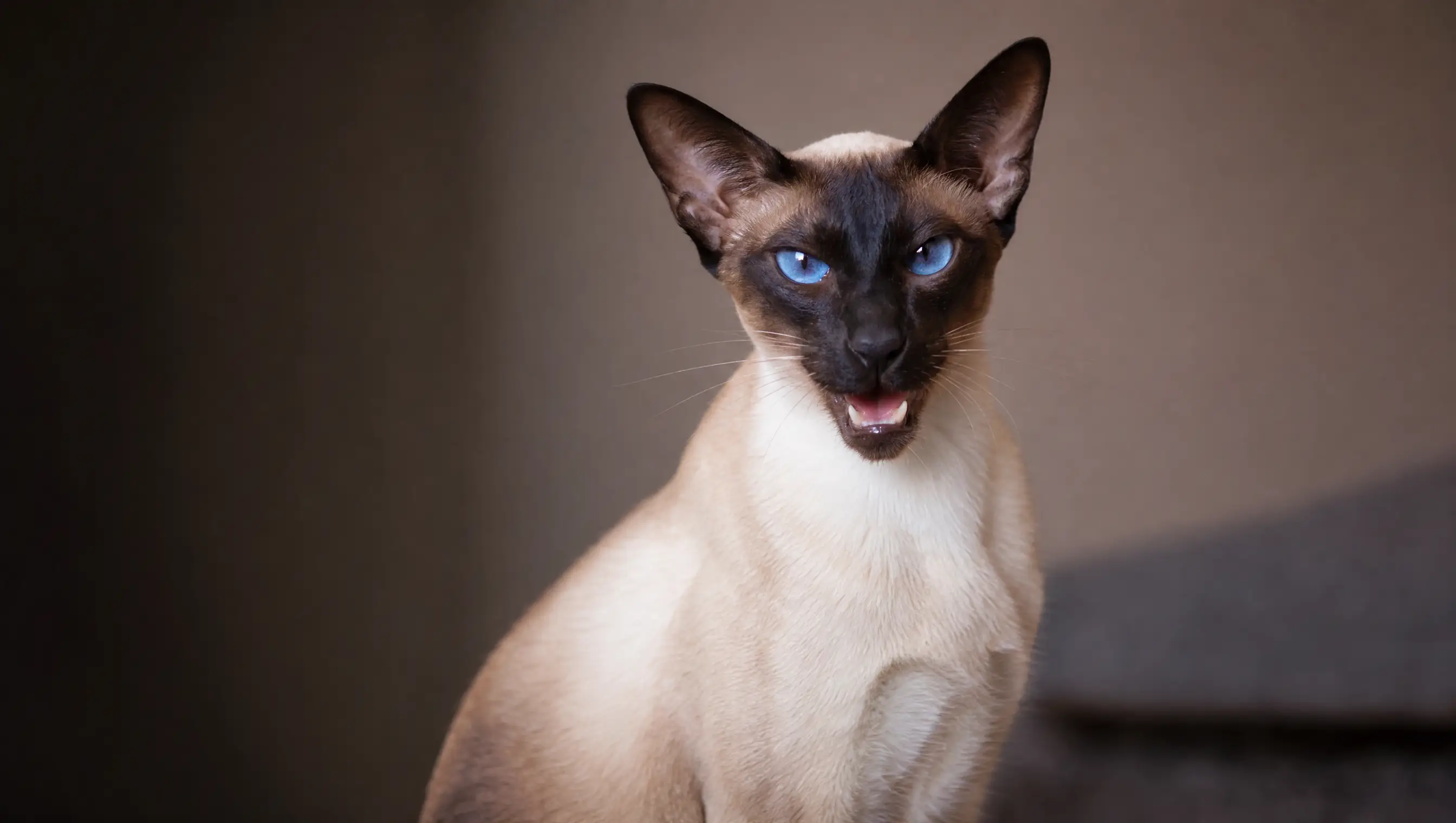
Treat the name as a promise, and keep the promise. Said name, good thing happens — a treat, a stroke, a play session — often enough that the word becomes reliable. The two classic mistakes poison it: using the name as a scold, and using it only when something unpleasant follows, so that "Mimmo" comes to mean the carrier is out. If the name has already soured, retire it for calling and build a fresh sound — a whistle, a double-click of the tongue — that has never predicted anything but good news. Chatty, people-focused breeds like the Siamese make this look easy; with a more reserved cat the same programme just needs more repetitions.
A recall — name, then coming actually pays — is genuinely trainable and genuinely useful, from calling a cat in at dusk to finding one in an emergency, and the mechanics are in clicker training a cat. Keep sessions short, pay every success for a long time, and never use the recall to deliver the cat to something it hates. And lower the ceremony: your cat has known its name all along. You're not teaching recognition. You're renegotiating the fee.
Common questions
Do cats know their names?
Yes. In a 2019 Tokyo study of 78 cats, cats reliably reacted to their own name — ear swivels, head turns — after ignoring a string of soundalike words, and it worked even when a stranger's voice did the calling. Recognition is settled science; responding is a separate decision the cat makes.
Do cats understand words?
They understand associations, not language. Cats link specific sounds to specific outcomes — their name, other pets' names, food words — and a 2024 experiment found they form word-image associations from just a few exposures. Grammar means nothing to them; your tone and the event a word predicts mean everything.
Do cats recognize their owner's voice?
Yes. Research from 2013 onward shows cats distinguish their own person's voice from strangers saying the same words, and a 2021 study found they track your location by ear — reacting with surprise when a played-back voice seemed to jump impossibly across a room.
Why does my cat ignore me when I call it?
Because it can. The name studies showed cats recognising their names while declining to move — cats were never bred to obey a call the way dogs were. Whether a cat answers depends on what answering has led to before; a name that predicts good things gets a better response rate.
Can you train a cat to come when called?
Yes, and it's worth doing. Pair the name (or a fresh sound like a whistle) with something the cat genuinely values, pay every success, keep sessions short, and never use the recall to deliver the cat to medicine, carriers or baths. Most cats learn a reliable recall faster than their owners expect.
What names do cats respond to best?
Short, distinctive ones — one or two syllables that don't sound like the rest of your household's chatter, ideally with the high vowels people naturally stretch when calling. What matters more than the name itself is consistency: one form, said the same way, that reliably predicts something good.
More in Cats
Do cats love their owners? The kidnap experiment says yes
Science ran the same attachment test on cats that it runs on human infants, and 64% passed. What the secure-base test found, why one earlier study disagreed, and how a cat actually says it.
Do cats miss their owners? They even track the clock
Cats greet you harder after four hours away than after thirty minutes — they know how long you were gone. What missing looks like in a cat, when it tips into separation anxiety, and how to leave well.
How cats choose their favourite person
It isn't whoever fills the bowl. The Swiss living-room study found one habit that predicts a cat's favourite better than food ever did — and the person who ignores cats has it by accident.
Zoomies: why your cat sprints through the house at 3am
The wall-of-death lap around the living room has a name, a mechanism, and a fix for the 3am edition. Why a predator that sleeps sixteen hours a day sometimes has to spend the surplus all at once.
Headbutts and ankle rubs: what your cat marks you with
The forehead slam is called bunting, it comes with a chemical payload, and it's one of the biggest compliments a cat pays. What the glands are doing, what the group scent means, and when a rub is really an invoice.
Why cats bring you dead animals
The mouse on the doormat is not a gift in any human sense, and the two leading theories disagree about what it is. What the delivery means, how to respond, and the honest arithmetic of what outdoor cats do to gardens.