How neutering changes cat behavior — and what it won't fix
The two most common worries about neutering point in opposite directions: that it will change your cat's personality, and that it won't change the behaviour you're desperate to lose. The evidence says almost exactly the reverse. Neutering reliably removes the behaviours run by sex hormones — roaming, spraying, calling, fighting over mates — and leaves personality, play and affection alone, because those were never hormonal to begin with. Here's the honest map of what changes, what doesn't, and on what schedule.
What neutering changes — and what it can't touch
Think of it as removing one motivation, not editing the cat. Testosterone and oestrus hormones drive a specific package: patrolling and expanding territory, advertising for mates by scent and voice, and fighting rivals. Neutering winds that package down, which is why its effects are so consistent across cats. Everything else — playfulness, curiosity, hunting, the lap-cat-or-not question, how talkative your cat is over dinner — runs on temperament, breed and learning, and survives the operation untouched. A shy cat stays shy, a clown stays a clown. The one honest caveat: behaviours that started hormonal but ran long enough to become habit can outlive the hormones, which is why timing matters and why the small print further down exists.
The male changes
Castration has the bigger behavioural before-and-after. Roaming drops sharply — an intact tom treats the neighbourhood as a territory to patrol and a dating pool to monitor, and a neutered one mostly resigns both jobs, which alone removes a large slice of the road-accident and lost-cat risk. Fighting with other males declines with the competition that fuelled it, taking with it the abscesses and the main transmission route for FIV, which spreads through deep bite wounds. Urine loses much of its knock-you-over tomcat smell within weeks. And spraying, the headline complaint, stops or falls sharply in roughly nine out of ten males, as covered in detail in why is my cat spraying. The effects begin as hormone levels fall over days to weeks; long-practised habits can take longer to fade than the hormones did.
The female changes
Spaying's behavioural change is concentrated in one place: the heat cycle ends, and with it the fortnightly drama an intact indoor female runs from spring to autumn — the yowling and calling that owners routinely mistake for pain, the rolling and restlessness, the door-darting determination to reach the toms answering from outside, and the spraying some females do in season. What spaying doesn't do is flatten her: outside those hormonal windows an intact and a spayed female behave much the same, so what you lose is the oestrus behaviour, not the cat. The escape-artist pressure easing also matters more than it gets credit for — a female in heat is the household's most motivated escapee, and an indoor cat that wants outside is a far easier problem without hormones on the other side of the door.
What neutering won't fix
Neutering is not a behaviour cure-all, and expecting it to be one sets up the commonest disappointment at the vet's. It does little for play aggression — the ankle ambushes run on hunting drive, not testosterone — and nothing for fear aggression, scratching the sofa, or most litter-box problems, each of which has its own diagnosis and fix in why is my cat aggressive and the scratching guide. It won't dissolve a genuine feud between resident cats, because those run on fear and territory once established. And a minority of cats keep spraying after surgery — about one castrated male in ten and one spayed female in twenty — almost always because stress, not hormones, is now driving it. The pattern to remember: neutering removes motivations, and any behaviour with a second motivation keeps running on that one.
Timing, the operation, and the one change to plan for
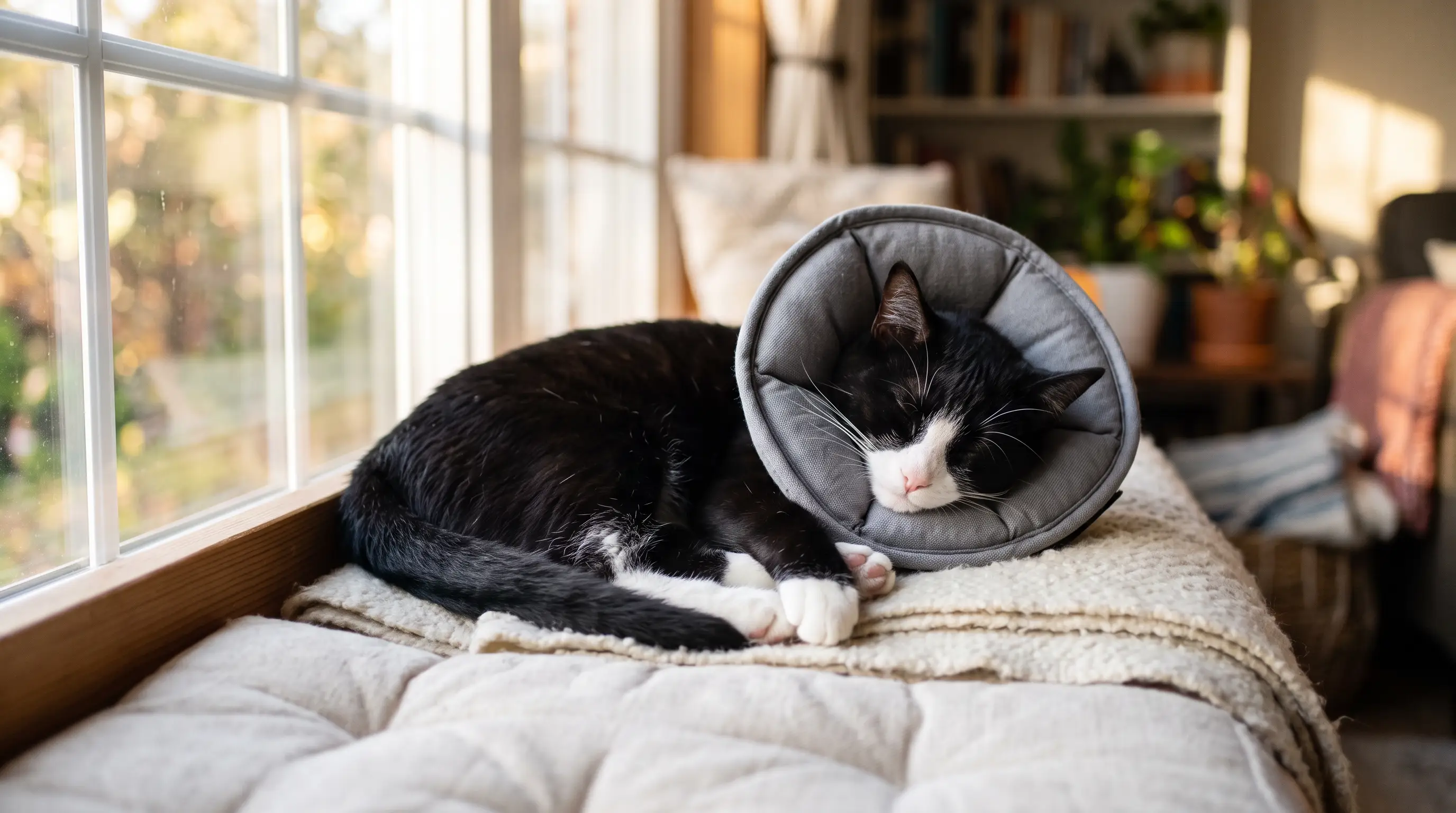
On age, ask your vet rather than the internet's folklore: many vets now recommend neutering around four months, before puberty — the old six-month rule of thumb postdates the point where kittens can first breed — and the best-supported behavioural argument for earlier is simple: hormonal behaviours that never start never have to be untrained. Right after surgery, expect a day or two of grogginess and quiet, and a recovery collar your cat will review poorly; that's the operation, not the new personality. The one lasting change worth planning for is metabolic, not behavioural: energy needs drop after neutering while appetite often doesn't, which is why weight quietly climbs in the year after surgery — the portion-and-food adjustments are in feeding a neutered cat. Handle that, and the post-neuter cat is the same cat minus the hormone-driven jobs — usually a more relaxed housemate with fewer reasons to leave.
Common questions
How does neutering change a cat's behavior?
It removes the hormone-driven behaviours: roaming and territory patrolling, urine spraying, fighting over mates, and heat behaviours like yowling and restlessness in females. Personality, play, affection and hunting aren't hormonal, so they don't change — a shy cat stays shy and a playful one stays playful.
Will neutering calm my cat down?
It calms the specific agitation that hormones cause — the pacing, calling, door-darting and rival-fighting — so an intact cat driven by those often does seem calmer afterwards. It doesn't lower a cat's energy or personality, and it won't fix play aggression or fear-based behaviour, which were never hormonal.
Do male cats change after being neutered?
In predictable ways: most roam far less, fight other males less (which also cuts abscesses and FIV risk), lose the strong tomcat urine smell within weeks, and stop or sharply reduce spraying — roughly nine out of ten do. Temperament, playfulness and affection stay as they were.
How long after neutering does cat behavior change?
Hormone levels fall over days to a few weeks, and most hormone-driven behaviour fades on that schedule. Behaviours that had years to become habit — long-established spraying, for instance — can take longer, because the routine outlives the hormones that started it.
Does neutering stop aggression in cats?
It reduces one specific kind: intermale fighting driven by mate competition. It does little for play aggression, fear aggression, petting aggression or a feud between resident cats, which run on hunting drive, fear and territory — those need their own diagnosis and plan, not surgery.
At what age should I neuter my cat?
Ask your vet for your cat's case, but many vets now recommend around four months, before puberty — cats can breed younger than the traditional six-month advice assumed. Behaviourally, earlier has a clean advantage: hormonal habits that never start never need untraining.
More in Cats
Why is my cat spraying? What it means and how to stop it
Spraying isn't a litter-box failure — it's a message about territory, written in urine. How to tell it from peeing, what's behind it, and the fixes that hold.
Why is my cat aggressive? Causes and how to calm it
Cat aggression isn't a personality — it's a diagnosis with about six usual suspects, and each one has a different fix. Work through them in order and the biting usually explains itself.
Why do cats hiss? What it means and what to do
A hiss is not an attack — it's the thing a cat does to avoid one. What the sound actually is, what triggers it, and why the polite answer is always to back off.
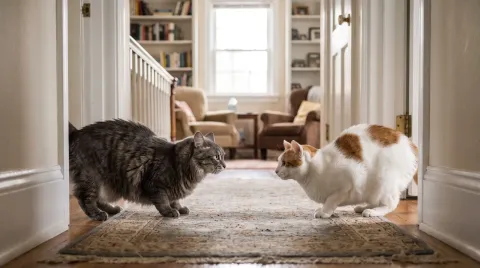
Why are my cats fighting? How to restore the peace
Two cats that shared a bed for years can turn into enemies in an afternoon. What breaks a feline relationship, why 'letting them fight it out' entrenches the war, and the reset that works.
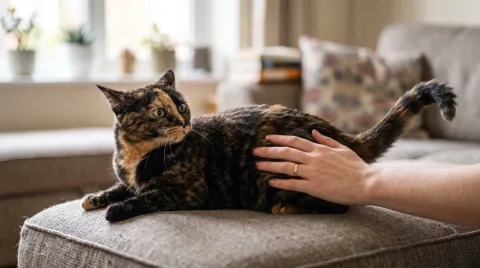
Why your cat bites you mid-stroke
Purring one second, teeth the next — petting-induced aggression is the most misread move in cat ownership. The warnings arrive earlier than you think, and the fix is counting, not forgiveness.
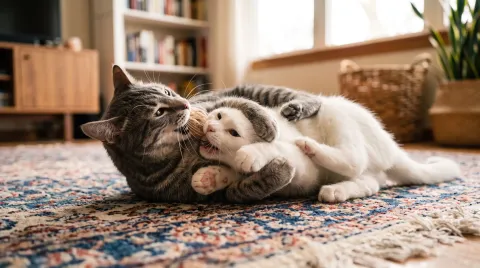
Are my cats playing or fighting? The five reads
Wrestling, neck bites, bunny kicks and thundering chases — most of it is play, some of it isn't, and the difference is visible in five places. What to check, when to step in, and how to step in without getting shredded.