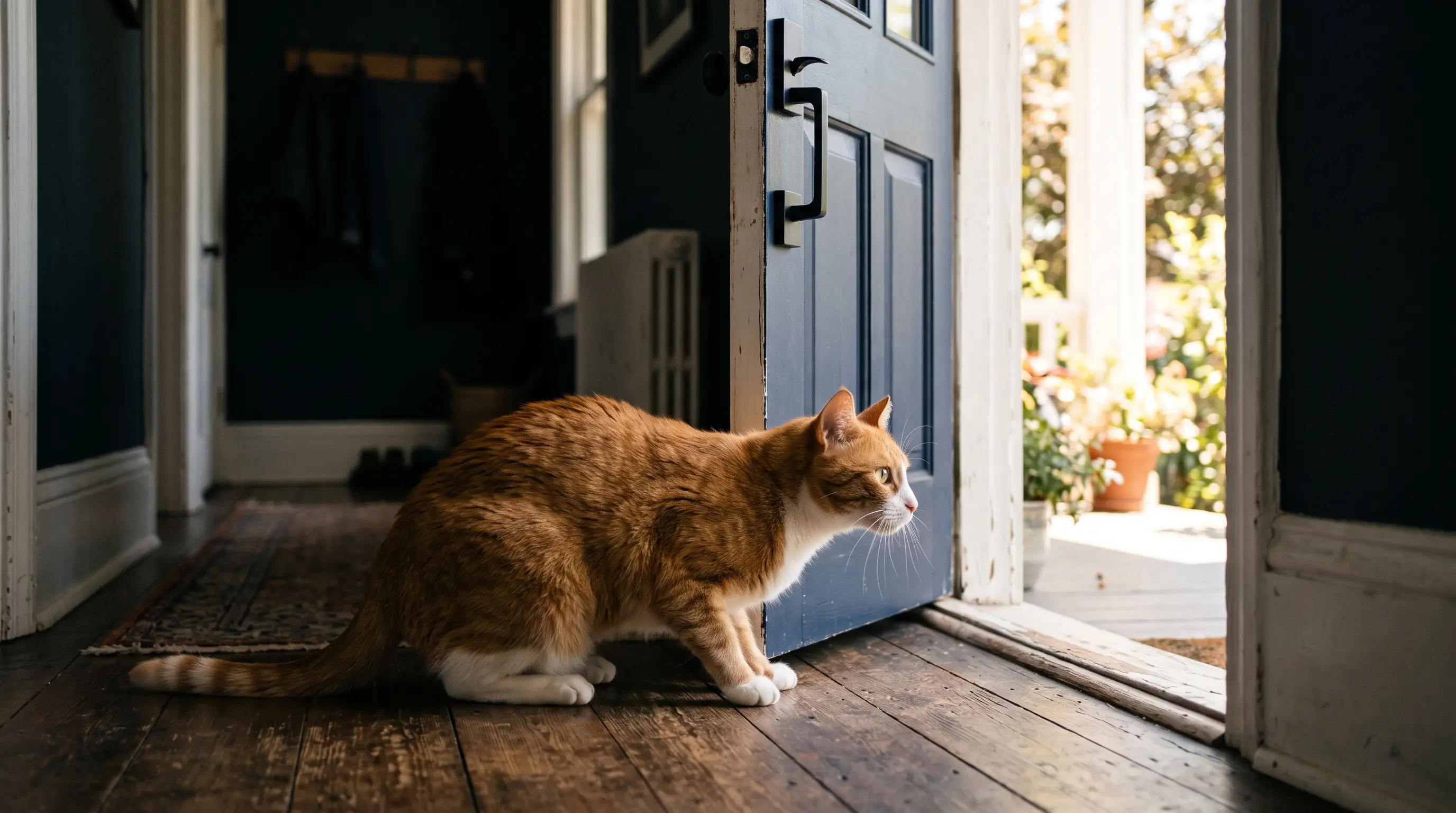
The door-dasher: why your indoor cat plots escape
You chose the indoor life for good reasons, and your cat repays you by lurking at the front door like a bank robber casing a vault. Door-dashing, window yowling and the meaningful stares at the handle aren't ingratitude, and they aren't proof the cat is miserable: they're a territorial predator responding to the single most interesting stimulus in its world — the boundary it can't patrol. Here's what's actually pulling from the other side of the door, an honest look at the indoor-outdoor question Europeans genuinely disagree about, and the middle grounds that let both of you win.
What's pulling from the other side
A cat's attachment has two anchors — you, and the territory — and the second one doesn't stop at the wall. Everything a cat's senses are tuned for is out there: the scent bulletins of other cats along the fence line, birds at ground level, the crepuscular rush hours when everything worth hunting moves. A door that opens twenty times a day is a tear in the territory's fabric, leaking sound and smell, and the crouch beside it is not longing so much as a professional staking out an unworked beat. Intact cats add hormones to the pull — a female in season or an unneutered male will go through you, not past you — which is why neutering alone deletes a large share of door-dashing.
Spring and autumn sharpen everything: territory disputes outside get loud, prey gets busy, and a cat that ignored the door all winter starts casing it again. None of this means the indoor life is failing. It means the animal is intact and paying attention, and the pressure can be redirected — the same energy budget that funds the 3am sprints funds the door campaign.
The indoor-outdoor question, honestly
This is a debate where geography does most of the arguing. In much of Europe, letting cats roam is the norm and gardens are the assumed backdrop of a cat's life; the case against roaming has grown anyway, and it isn't sentimental: traffic is the great killer of young cats, unroamed territory means fights, abscesses and the diseases that pass through bites, and the hunting cost to garden wildlife is real enough that we gave it its own honest arithmetic. Indoor cats, on average, simply live years longer.
The honest other half: an under-furnished indoor life has costs too — the under-stimulation patterns from the boredom guide, the weight gain, the frustration you're currently watching at the door. The point of this article is not that walls fix everything. It's that the choice isn't binary: between free roaming and a bare flat sit several middle grounds that keep the safety and return most of what the door promises.
The middle grounds
The catio — a netted balcony, a mesh-enclosed patio corner, a window box run — is the best deal in cat ownership: real weather, real birdsong, real sunbathing, zero traffic. Even two square metres of secured balcony changes a cat's day. Harness walking genuinely works for a minority of cats — the patient training is in harness training a cat — and suits the bold, food-motivated ones; a cat that flattens into a pancake on grass three sessions running is casting its vote, and it counts. Supervised garden time, with you present and the session started and ended by you (a treat ritual at the door), gives a routine-loving animal the outdoors as an appointment rather than a right to assert at every opening.
And whatever you choose, fortify the inside per the enrichment programme — hunts, heights, foraging, window theatre. A cat whose indoor day contains a career applies less pressure to the exits. The door itself gets managed, not negotiated: never let dashing succeed (one success funds a hundred attempts), make the door zone boring — greetings and treats happen away from it, a mat or table by the entrance gives arriving humans a decoy focus — and teach the household that the cat is always visually located before the door swings.
If the escape happens anyway
Most first-time escapees don't run — they hide, close and low. An indoor cat outside its territory is overwhelmed, not adventuring: check within a few houses' radius first, under cars, in hedges, sheds and stairwells, at dusk and dawn when a frightened cat feels safest moving. Put its litter tray or a worn item of your clothing by the door — the scent beacon works better than folklore suggests — and call softly at quiet hours rather than searching loudly at noon. A microchip is what actually brings cats home; check the registration data now, not the day you need it, and keep one clear side-on photo of your cat on your phone — it's exactly what a lost-cat poster needs.
Then fix the leak, not the cat. Door drills for the household, the boring-door-zone protocol, the exits audit (window screens and the tilted-window trap from the falling story, balcony netting), and a harder look at the indoor programme, because a cat with a full schedule dashes less. If the yowling-at-the-door is new, constant and paired with restlessness in an older cat, run it past the vet — hyperthyroidism and cognitive changes both write that script. And if what's outside the door is a female in season two gardens over: the fix has been routine surgery since your grandparents' time, and it remains the single most effective anti-escape device ever invented.
Common questions
Why does my indoor cat want to go outside so badly?
Because its senses are tuned to the territory beyond the wall: other cats' scent marks, prey movement, the dawn and dusk rush hours. The door leaks sound and smell, making it the most interesting object in the flat. Intact cats feel a hormonal pull on top — neutering alone removes a large share of door obsession.
How do I stop my cat from door dashing?
Never let it succeed — one escape funds a hundred attempts. Make the door zone boring: greetings and treats happen away from the entrance, arriving humans get a decoy focus, and the household learns to locate the cat visually before opening. Then lower the pressure with daily play-hunts, foraging and window perches, so the exits matter less.
Is it cruel to keep a cat indoors?
Not if the indoor life is furnished. Indoor cats avoid traffic, fights, and bite-transmitted disease, and on average live years longer; the genuine cost — under-stimulation — is fixable with hunts, heights, foraging and window theatre. A bare flat is the cruel version. A furnished one plus a catio or supervised garden time beats free roaming on every measured outcome except romance.
Should I let my indoor cat outside sometimes?
Structured versions work better than an open door: a secured catio or netted balcony, harness walks for cats that take to them, or supervised garden sessions you start and end with a ritual. Ad-hoc unsupervised outings teach the cat the door sometimes wins, which sharpens the dashing rather than relieving it.
What do I do if my indoor cat escapes?
Search close and low first — most first-time escapees hide within a few houses, under cars, in hedges and sheds. Look at dusk and dawn, call softly, and put the litter tray or worn clothing by the door as a scent beacon. A registered microchip is what actually brings cats home; verify the contact data before you ever need it.
Will my cat stop wanting outside after neutering?
Largely, if hormones were driving it — roaming, calling and door obsession all drop sharply after neutering in both sexes, and it's the single most effective intervention there is. The territorial curiosity remains, but at a level that enrichment and a managed door routine can absorb.
More in Cats
Why is my cat spraying? What it means and how to stop it
Spraying isn't a litter-box failure — it's a message about territory, written in urine. How to tell it from peeing, what's behind it, and the fixes that hold.
Why is my cat aggressive? Causes and how to calm it
Cat aggression isn't a personality — it's a diagnosis with about six usual suspects, and each one has a different fix. Work through them in order and the biting usually explains itself.
Why do cats hiss? What it means and what to do
A hiss is not an attack — it's the thing a cat does to avoid one. What the sound actually is, what triggers it, and why the polite answer is always to back off.
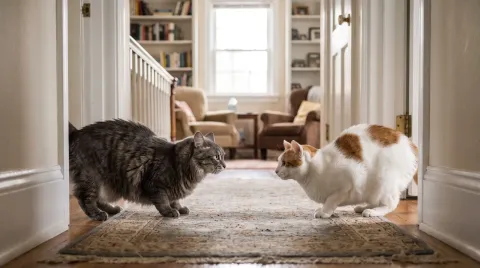
Why are my cats fighting? How to restore the peace
Two cats that shared a bed for years can turn into enemies in an afternoon. What breaks a feline relationship, why 'letting them fight it out' entrenches the war, and the reset that works.
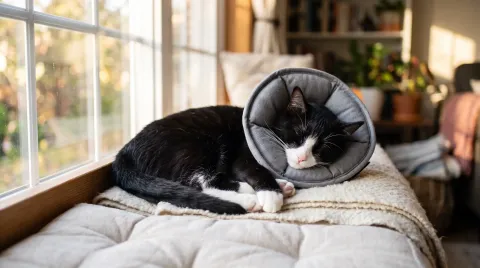
How neutering changes cat behavior — and what it won't fix
Neutering deletes the hormone-driven behaviours — the roaming, the spraying, the 3am opera — and touches almost nothing else. What changes, what doesn't, and when.
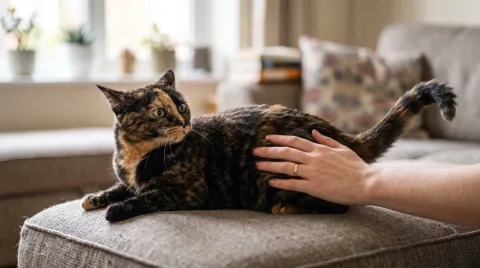
Why your cat bites you mid-stroke
Purring one second, teeth the next — petting-induced aggression is the most misread move in cat ownership. The warnings arrive earlier than you think, and the fix is counting, not forgiveness.