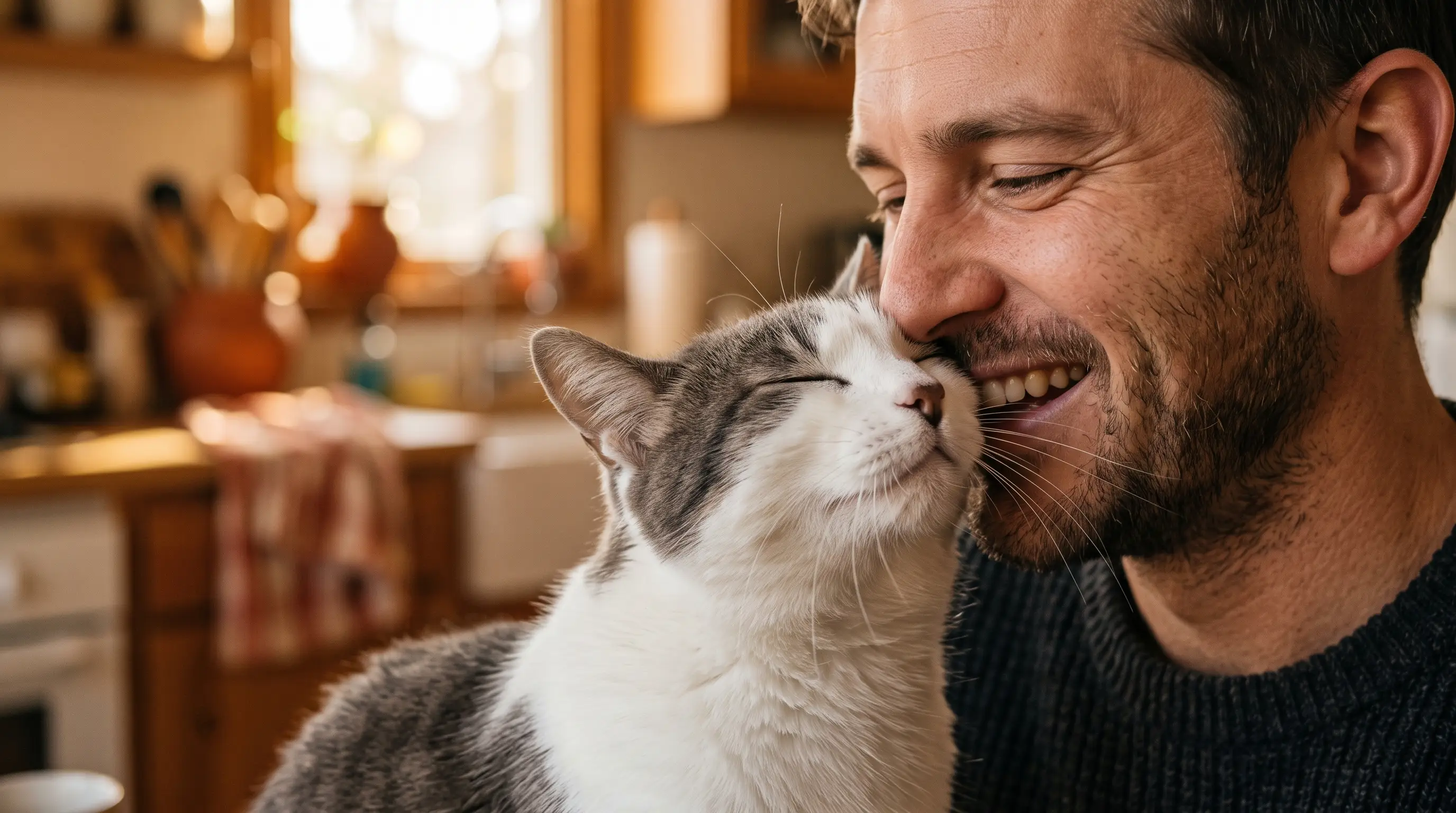
Headbutts and ankle rubs: what your cat marks you with
When your cat slams its forehead into your shin, your laptop or your face, it is not being clumsy and it is not just asking for breakfast. The move is called bunting, it deploys scent glands a cat carries on its head for exactly this purpose, and its meaning is closer to a signature than a hug: you are being marked as safe, familiar and part of the household's shared smell. Here is the machinery behind the headbutt, what your cat is actually writing on you, and how to tell the affectionate rub from the one that's merely presenting a bill.
The scent glands on your cat's face
A cat's head is ringed with scent glands: along the cheeks, under the chin, at the corners of the mouth, on the lips, and up at the temples between eye and ear. Each produces pheromones — chemical signals other cats read fluently and humans can't smell at all. When your cat drags its cheek along the table corner, chins the edge of your phone, or presses its forehead into your leg, it's applying those secretions to the surface. The behaviour is called bunting, and the choice of gland is not random: facial pheromones are the calm ones, the family stamp — cats mark territory boundaries they're anxious about with urine, and things they feel entirely safe around with their face.
That distinction is the whole message. The furniture gets the cheek. The doorframe gets the cheek. And you, if you're lucky, get the full forehead — deployed on the things a cat considers the safe centre of its world.
The group scent: why you're being labelled
Cats that live together run a shared scent project. Colony cats rub against each other constantly — a behaviour called allorubbing — blending their individual smells into one group odour that means us. A cat coming home from the vet smelling wrong often gets hissed at by its own housemates until the shared smell is re-established; that's how central the group scent is to feline social life. When your cat headbutts you, it is doing allorubbing across the species line: folding you into the colony smell, and topping you up every time you shower it off or come home wearing the outside world.
This is also why the headbutt is a genuine compliment. In cat colonies, rubbing flows preferentially toward valued companions. A cat that bunts you has filed you under family — and the science on how real that bond is runs through do cats love their owners.
Headbutt, chin, ankle-weave: the dialect
The moves differ in intensity more than meaning. The full forehead press — sometimes with a little push, sometimes held for seconds — is the strongest form, usually reserved for people and often paired with purring and a slow blink. The cheek drag along your hand or jaw is everyday affection plus marking. Chinning — rubbing the underside of the jaw on objects — skews toward claiming things: boxes, bags, the new laptop. And the figure-of-eight ankle weave is a composite: marking from the cheeks and flanks, a greeting with the tail up, and — timed around your arrival in the kitchen — an unmistakable invoice. The tail-up part matters; it's the friendly-approach flag cats raise for companions they trust, and the rest of that signal system is mapped in cat body language.
Context does the translating. A headbutt on the sofa at rest is pure social maintenance. The same move at 6:58am, two minutes before feeding time, from a cat walking you toward the bowl, is marking and lobbying at once. Both are real; cats see no contradiction in loving you and managing you simultaneously.
When the rub-fest turns into a bite
A common sequence puzzles owners: the cat rubs, purrs, headbutts — then nips the hand that responded. This is rarely betrayal and usually arithmetic. Rubbing is the cat's initiation, on the cat's terms; petting is your reply, and if your reply runs longer or lands elsewhere than requested, arousal climbs until the cat corrects you with teeth. The warning signs come first — a stilled body, a flicking tail-tip, skin rippling, ears turning — and the skill is ending your part of the exchange while the cat is still enjoying it. The full read on that overstimulation ladder is coming in this cluster's petting-aggression guide; until then, the short version is: let the cat run the meeting.
One more disambiguation. Bunting is a firm, directed press with a relaxed cat attached. Relentless head-pressing into walls or corners — a cat standing with its head jammed against a surface, unresponsive — is a neurological red flag and a genuine emergency, nothing like the social headbutt. And a cat that suddenly rubs frantically at its own face, or stops bunting altogether, may be telling you about dental pain or skin trouble; a change in the pattern is worth reading alongside the stress signs owners miss.
Answering a headbutt properly
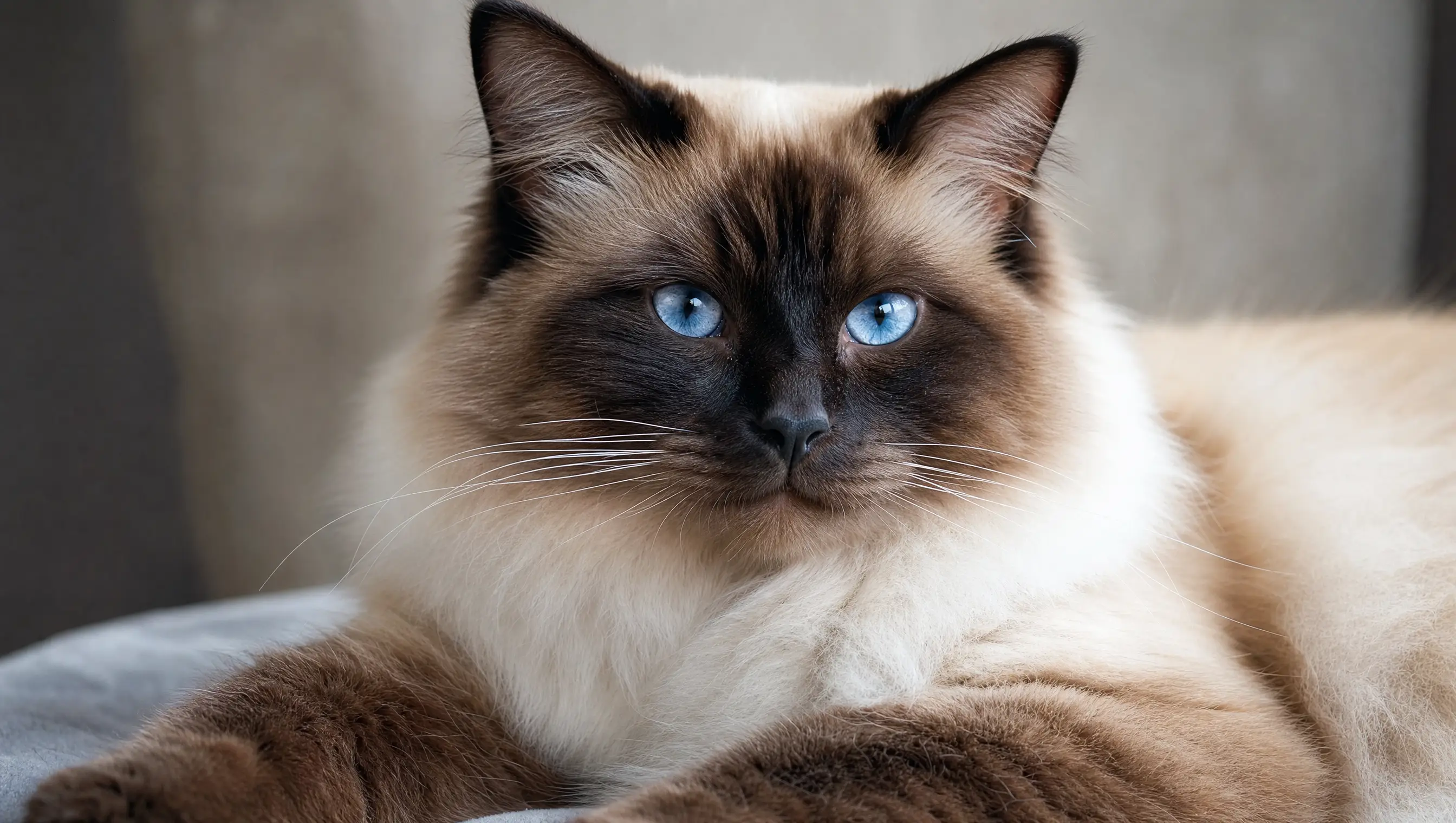
You can reply in the cat's own language. Offer the slow blink back. Present a loose fist or a finger at nose height and let the cat choose to rub it — that's how cats greet, nose first, and it beats descending on the head from above. Cheek and chin scratches land on the gland zones the cat was using anyway, which most cats read as fluent conversation; a soft forehead-to-forehead lean, if your cat is the full-contact type like many a Ragdoll, closes the loop entirely. What you shouldn't do is treat every bunt as a food request and pay it in kibble — you'll convert a social gesture into a transaction, and lose the nicest sentence your cat says to you.
And let the marking stand. The invisible graffiti on your ankles, your laptop and your jaw costs you nothing and means the household smells right to its most territorial member. A cat that stops writing on you is the one to worry about. A cat that headbutts you daily has, in its own chemical handwriting, signed you as family.
Common questions
Why do cats headbutt you?
It's called bunting: a cat pressing its forehead or cheeks against you deploys facial scent glands that mark you with calm, familiar pheromones — the same group scent cats in a colony share by rubbing on each other. A headbutt files you under family. It's marking and affection at once, aimed at things the cat feels entirely safe around.
What does it mean when a cat rubs against you?
Rubbing blends the cat's scent with yours, maintaining a shared household smell, and doubles as a greeting — especially with the tail held straight up. Context adds meaning: a rub at rest is social maintenance; a figure-of-eight around your ankles at feeding time is marking plus a clearly worded request.
Why does my cat rub against my legs and then bite me?
Usually overstimulation, not betrayal. The rub was the cat's initiation; if your petting reply runs longer than requested, arousal climbs until the cat corrects you with a nip. Watch for the warnings — stilled body, flicking tail-tip, rippling skin, turning ears — and end your part while the cat is still enjoying it.
Why does my cat headbutt my face?
The face-to-face headbutt is the strongest form of bunting, generally reserved for trusted people. Your face carries your scent most strongly, and the cat is mingling its own with it at close range — often with purring and slow blinks attached. It's about as unambiguous as feline affection gets.
Why does my cat rub its face on everything?
Cheek-rubbing and chinning label the objects of its territory with calm facial pheromones — furniture corners, doorframes, bags, your laptop. It's normal maintenance of a scent map. A sudden frantic increase in face-rubbing, or a cat that stops entirely, can signal dental or skin trouble and is worth a vet check.
Is a cat headbutt a sign of affection?
Yes — with a caveat either way. Bunting is directed preferentially at valued companions, so a headbutt is a genuine social compliment. But distinguish it from head-pressing: a cat standing with its head jammed motionless against a wall or corner is showing a neurological emergency sign, not affection, and needs a vet immediately.
More in Cats
Do cats love their owners? The kidnap experiment says yes
Science ran the same attachment test on cats that it runs on human infants, and 64% passed. What the secure-base test found, why one earlier study disagreed, and how a cat actually says it.
Do cats miss their owners? They even track the clock
Cats greet you harder after four hours away than after thirty minutes — they know how long you were gone. What missing looks like in a cat, when it tips into separation anxiety, and how to leave well.
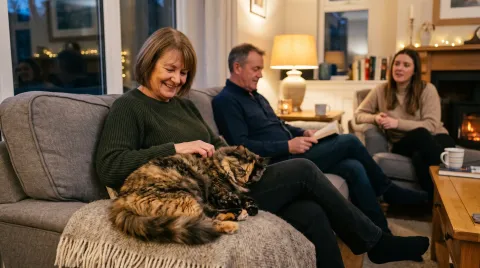
How cats choose their favourite person
It isn't whoever fills the bowl. The Swiss living-room study found one habit that predicts a cat's favourite better than food ever did — and the person who ignores cats has it by accident.
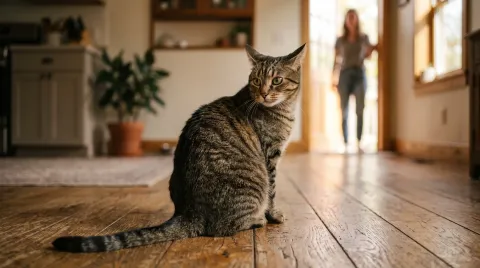
Cats know their names. They've decided not to answer
A Tokyo lab proved cats pick their own name out of a string of similar words — even from a stranger's mouth. What cats actually understand of what you say, and why the response is optional.
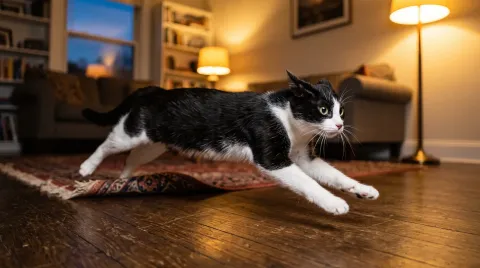
Zoomies: why your cat sprints through the house at 3am
The wall-of-death lap around the living room has a name, a mechanism, and a fix for the 3am edition. Why a predator that sleeps sixteen hours a day sometimes has to spend the surplus all at once.
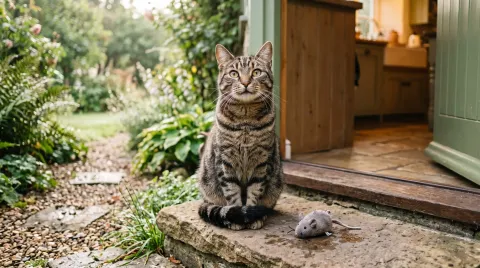
Why cats bring you dead animals
The mouse on the doormat is not a gift in any human sense, and the two leading theories disagree about what it is. What the delivery means, how to respond, and the honest arithmetic of what outdoor cats do to gardens.